The first time many New London boaters hear the phrase phase separation, it is from a mechanic explaining why an engine that ran perfectly in October will not start in April. The culprit is the fuel in the tank, ordinary gasoline blended with ethanol, and a winter of sitting still. Boats suffer from ethanol fuel more than cars do, for structural reasons: they sit longer, their tanks vent to humid lake air, and their fuel systems were often designed before ethanol blends were universal. This walkthrough follows what actually happens, step by step, so a first-time boat owner can prevent it rather than diagnose it.
Ethanol is alcohol, and alcohol absorbs water. In a car that burns a tank a week, absorbed moisture passes through harmlessly in tiny amounts. In a boat tank that sits for months, the absorption accumulates until the ethanol and water drop out of the gasoline together, sinking as a separate layer at the bottom of the tank. That is phase separation, and no additive can remix it once it happens.
The problem, step by step
- Fill-ups bring in gasoline blended with ethanol, typically a tenth of the blend, which runs fine while the boat is in regular use.
- During storage, the vented tank breathes humid air as temperatures swing, and the ethanol steadily absorbs that moisture.
- Absorption reaches a limit; the ethanol-water mixture separates from the gasoline and sinks to the bottom of the tank, where the fuel pickup lives.
- The engine's first drink in spring is that bottom layer, which does not burn properly, so the engine sputters, stalls, or refuses to start.
- Meanwhile the gasoline left above has lost the ethanol that provided part of its octane, so even the good layer is weaker fuel than what you bought.
- The water layer also corrodes tank and fuel system parts from the inside, seeding the next problem while you fix the first.
Prevention, which is the whole game
Since separation cannot be reversed, everything is prevention. Store the boat with the tank nearly full, which leaves less air space and less moisture to absorb, and add a fuel stabilizer formulated for ethanol blends at layup, running the engine long enough to draw treated fuel through the whole system. Stabilizer slows the aging of the gasoline and helps the blend tolerate moisture longer; it is a seatbelt, not a cure, and it works only when added to fresh fuel before storage, not poured into a problem in spring.
Where it is available and practical, some boaters use ethanol-free gasoline for the last fill of the season, removing the absorber from the tank entirely for the storage months. For boats in regular year-round use the risk is much lower, because fuel turns over the way it does in a car. The danger zone is specifically the boat that sits, which is most boats, all winter, every year.
If it already happened
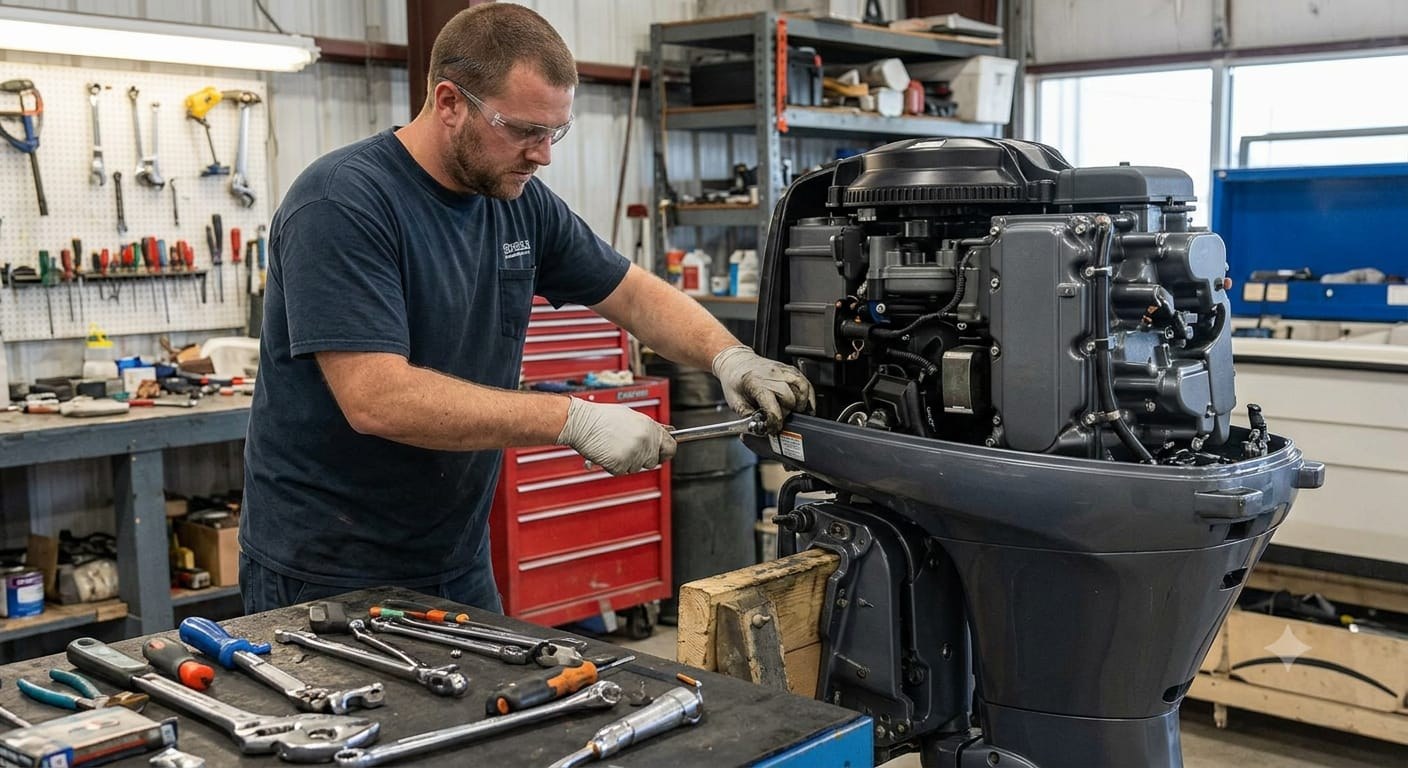
The honest fix is disposal and replacement: the separated fuel must come out, and the tank and lines get inspected for water and corrosion before fresh fuel goes in. Trying to burn through a separated tank risks the engine ingesting the water layer under way, which can stall the motor in exactly the places a stall is least welcome. Fuel system service after a separation event is standard work, and Burris Marine's engine maintenance and tune-up service is where a spring no-start of this kind usually gets sorted, along with a plan so next winter ends differently.
Fuel filters earn a mention here too. A water-separating fuel filter is standard equipment on many outboards and cheap protection on the rest, catching moisture before it reaches the engine during the season. It does not prevent phase separation in the tank, but it is the last line of defense against the ordinary water that boating life introduces, and it belongs on the annual service list.
The encouraging part is how mechanical this problem is. Full tank, stabilizer in fresh fuel, engine run to circulate it: three habits at layup, and phase separation simply never gets its winter. First-time owners who learn it once never pay tuition twice.
Common questions
Can a stabilizer fix fuel that has already separated?
No. Once ethanol and water drop out of the gasoline, no additive will remix them. The separated fuel has to be removed and replaced; stabilizer is prevention for fresh fuel only.
Why do boats get this problem more than cars?
Boats sit unused for months, their tanks vent to humid air, and fuel turns over slowly. Cars burn fuel too quickly for moisture to accumulate to the separation point.
Is ethanol-free gas worth using for storage?
For the final fill before a long layup, many boaters consider it the cleanest prevention, since it removes the water-absorbing ingredient from the stored fuel entirely.
Photos in this guide are representative stock images.
← All guides from Burris Marine← Back to Burris Marine