A marine battery lives a harder life than the one in your truck. It sits through months of stillness, gets bounced across chop all summer, and is asked to be perfect again on the first warm Saturday of spring. Around New London, winter is when batteries are quietly lost, not to cold alone but to the combination of self-discharge and neglect. A battery that goes into storage partly charged can be a battery that never comes back, and the failure always introduces itself at the ramp.
The chemistry is simple. All lead-acid batteries self-discharge sitting still, and as the charge falls, the electrolyte weakens toward plain water. A fully charged battery resists freezing to temperatures far below anything the Piedmont produces. A discharged one can freeze in an ordinary cold snap, cracking its case or buckling its plates, and even without freezing, sitting discharged grows sulfate crystals on the plates that permanently eat capacity.
A battery year, month by month in spirit
| When | What to do | Why |
|---|---|---|
| Late fall, at winterization | Charge fully, clean terminals, decide in-boat or removed for storage | Starting storage full is the single biggest factor in spring survival |
| Monthly through winter | Check charge; top up with a maintainer or periodic charging | Self-discharge is steady; a maintainer simply cancels it out |
| Mid-winter cold snaps | Confirm a stored battery is charged before the coldest nights | Freeze protection lives in the charge level, not in the battery's toughness |
| Early spring | Load-test before the first launch, not at the ramp | A battery can show surface voltage and still fail under starter load |
| Summer | Keep terminals clean and snug; check water on serviceable batteries | Vibration and heat are the in-season enemies; loose connections mimic dead batteries |
Tenders, chargers, and the difference
A battery maintainer, often called a tender, is not just a small charger. It charges to full, then floats, holding the battery at a resting voltage without overcharging it, for months at a time. That float is the entire point: a plain charger left connected indefinitely can cook a battery dry, while a tender is designed to be forgotten. For a boat stored at home near New London, a tender on a timer-checked outlet is the simplest winter insurance there is. For a boat stored without power, the routine is a full charge at layup, a mid-winter check, and terminals disconnected so parasitic draws from clocks and electronics cannot sip the battery down.
Where the boat sleeps changes the plan
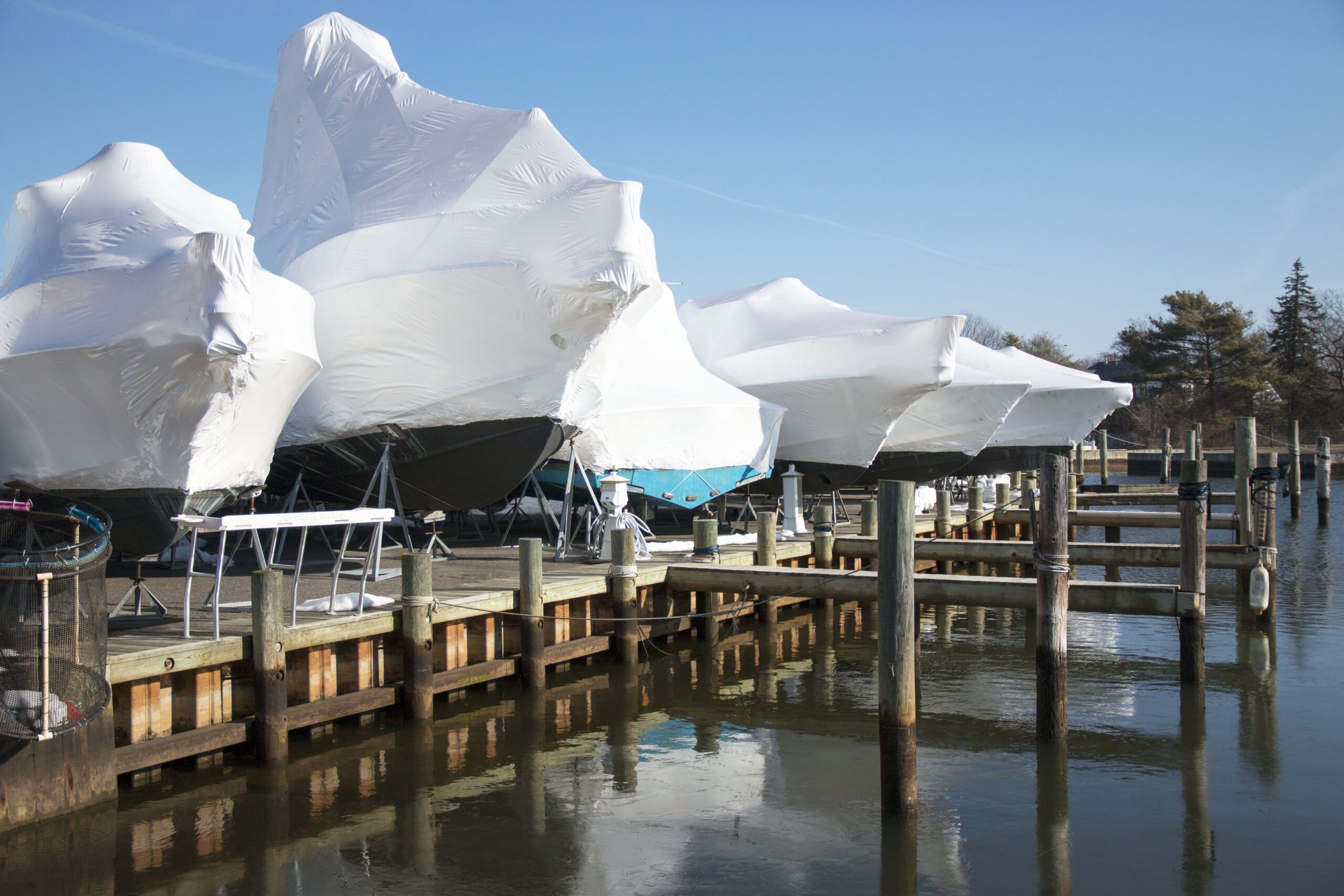
A boat in a garage at home gets the easy version: tender plugged in, done. A boat in a storage yard or at a marina without an outlet needs the battery removed and kept somewhere it can be maintained, or at minimum charged on a schedule someone actually keeps. Burris Marine handles winterization and storage prep as a listed service, and battery handling is a standard part of that work, because shops see the spring side of every winter shortcut.
Two batteries are not twice the protection if both are neglected, and a dual-bank boat should have each bank maintained or removed. Label cables before disconnecting anything; spring-you will be grateful in a way winter-you cannot imagine.
Age counts, even with good care
Care extends a battery's life, but chemistry keeps the final word. Heat during the operating season ages plates steadily, and a battery that has survived several Piedmont summers is living on borrowed capacity no matter how faithfully it was tended. Writing the purchase season on the case with a marker, a common shop habit, turns the spring decision from guesswork into arithmetic: a young battery gets tested and trusted, an old one gets tested and doubted.
The spring test that tells the truth
Voltage alone flatters weak batteries. A load test, which asks the battery to deliver current the way a starter does, is the honest exam, and hydrometer readings on serviceable batteries tell the same story cell by cell. Test in the driveway week, replace on your schedule, and the first launch of the year becomes a boating day instead of a jump-pack negotiation in a crowded ramp line.
Common questions
Can a discharged battery really freeze in a North Carolina winter?
Yes. As charge falls, the electrolyte approaches water and its freezing point rises toward 32 degrees. A fully charged battery resists far colder temperatures than a Piedmont winter delivers.
Should I remove the battery from the boat for winter?
If the boat is stored without power for a maintainer, removing it to a place where it can be kept charged is the safest route. If a tender can stay connected, it can remain installed.
How long do marine batteries usually last?
Typically a few seasons, heavily dependent on care. Batteries kept charged and topped up last far longer than batteries repeatedly run flat and left that way.
Photos in this guide are representative stock images.
← All guides from Burris Marine← Back to Burris Marine